For many rental businesses, the spreadsheet problem is not only an administrative nuisance. It is a limit on how quickly a team can quote, reserve, dispatch, invoice and recover assets without losing detail between departments.
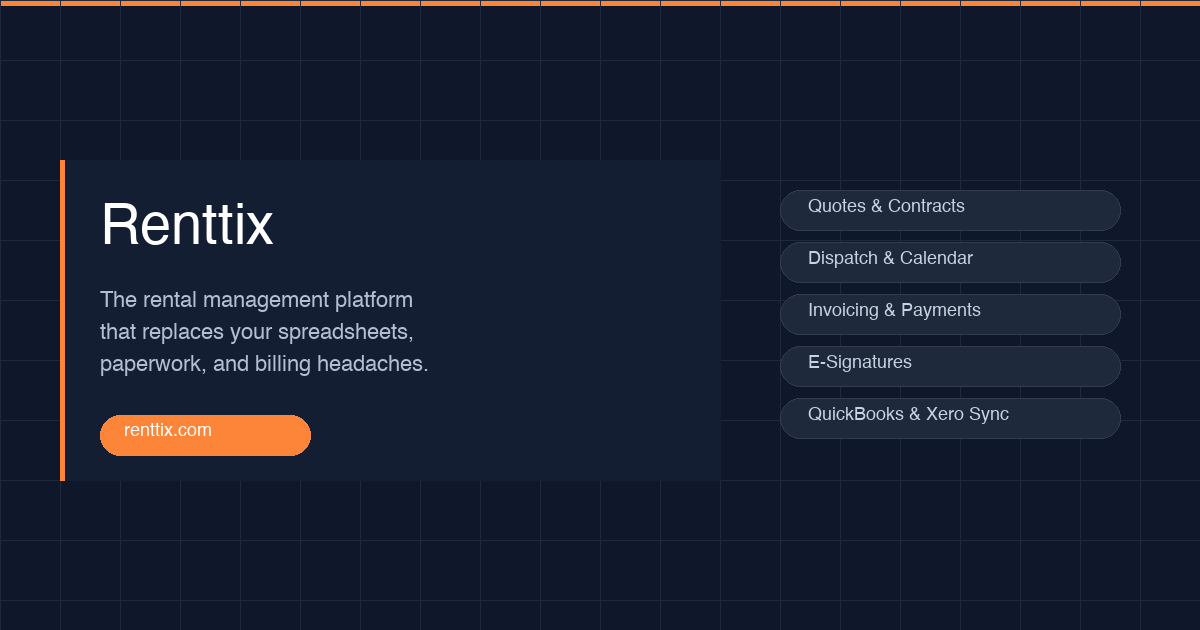
Renttix is positioning itself around that gap. Its rental management software is aimed at hire firms that have outgrown disconnected booking sheets, manual paperwork and finance workflows that depend on repeated re-entry.
For rental firms, the operational issue is that the sale does not finish when an order is accepted. The business still has to manage availability, customer records, contracts, deposits, delivery, collection, invoicing, damage checks, returns and asset readiness for the next job. That makes rental software more demanding than a simple booking database.
Built Around Rental Workflows
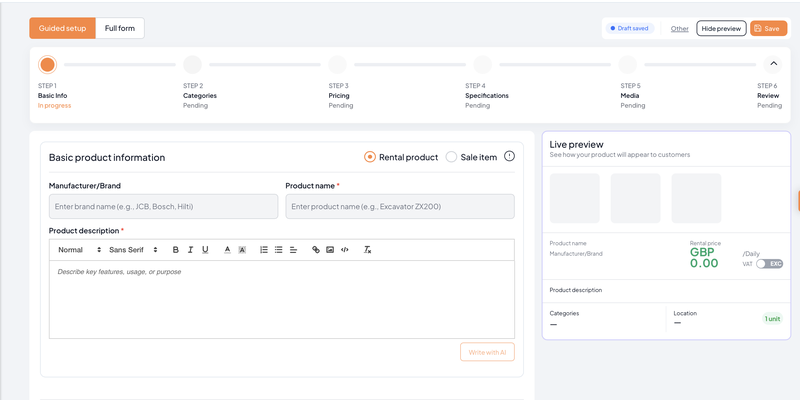
The commercial argument is straightforward: a rental company needs a system that follows the order from quote to return, while keeping the customer, asset and payment record aligned. Renttix’s product pages cover order management, customer records, contracts, dispatch planning, invoicing, payments, reporting, maintenance and integrations.
That breadth is useful only if the workflow remains clear. A small hire firm may be trying to move away from spreadsheets for the first time. A larger operator may need better role controls, branch visibility, reporting and accounting sync. In both cases, the value is less about adding another software layer and more about reducing the number of manual handovers needed to complete ordinary work.

Where Generic Tools Tend to Break
Rental businesses often look simple from the outside. A customer hires an item, uses it, and returns it. Inside the business, the workflow is much less tidy. Availability changes. Hire periods extend. Deposits need to be held or refunded. Damage may need to be recorded. Invoices may depend on the actual return date rather than the original plan.
This is where generic booking software can struggle. The record of the transaction has to keep changing as the operational facts change. Renttix’s relevance depends on whether it can make those changes visible to sales, dispatch, finance and management without forcing each team to maintain its own version of the truth.
The platform is aimed at rental sectors where these pressures recur: equipment hire, vehicles, events, tools, plant, furniture, storage and other asset-led rental categories. The common thread is not the asset type. It is the need to know what is available, where it is, who is responsible for it, and what still needs to happen commercially.

Quotes, Contracts and Customer Control
The quote is often the first point where rental admin starts to fragment. Pricing, terms, availability, customer records and internal notes can sit in different places. Renttix is strongest when framed as an attempt to keep that early commercial record connected to the contract, booking and eventual invoice.
Customer structure also matters. Rental firms may serve walk-in customers, regular contractors, company accounts, multiple job sites and repeat buyers. A cleaner customer record can reduce avoidable back-and-forth and help teams understand order history, payment behaviour and documentation requirements without searching through old files.
The contract layer is not cosmetic. E-signatures, stored terms and clearer document records can reduce uncertainty around what was agreed, what was delivered, and what happens if an item comes back late or damaged.
Dispatch and the Field Team
A rental platform has to deal with work that happens outside the office. Dispatch teams need to know what is going out, what is coming back, who is driving, which vehicle is assigned and whether a customer-facing job has been completed.
Renttix’s field value sits in that handover. If drivers, counter staff, office teams and finance staff are working from the same operational record, the business has a better chance of reducing missed collections, incomplete notes and delayed paperwork.
That is not a glamorous feature, but it is commercially important. The margin in rental work is often protected by operational detail: delivery accuracy, clear collection windows, better damage evidence and faster return processing.
Billing Is Still the Hard Part
Rental billing is rarely just a standard invoice. Hire firms may deal with minimum periods, partial weeks, deposits, refunds, extensions, off-hires, late returns, credits and recurring invoice runs.
Renttix puts payments, deposits, invoicing and accounting sync close to the operating workflow. The platform references Stripe payments and integrations with accounting tools including QuickBooks and Xero, which matters because the finance record should reflect what happened operationally rather than what was first entered at booking.
The more exceptions a rental business handles, the more costly manual reconciliation becomes. A platform that reduces re-keying between order management, payments and accounting can improve cash visibility and reduce avoidable finance admin.
Product Fit Matters More Than Feature Count
There is a risk in any vertical software pitch: the more sectors a platform addresses, the harder it can be to stay simple. Rental workflows vary by asset type, geography, customer base and operational maturity.
That makes product fit the real test. A small equipment hire company may care most about quotes, stock visibility and invoices. A vehicle rental operator may care more about deposits, documents and return condition. An event rental supplier may need stronger calendar and delivery coordination. Renttix’s pitch works best when evaluated against those concrete workflows rather than against a long checklist.
For teams reviewing the platform, the useful question is not “how many features are listed?” It is whether the system reduces the specific points where orders, assets, people and payments currently fall out of sync.
Client Spotlight
What Renttix is really selling
A cleaner operating rhythm: quote with better context, reserve assets accurately, dispatch with visibility, keep payments and deposits close to the order, and return assets into availability with fewer manual fixes.
Why It Matters
Rental businesses often grow operationally before they grow digitally. The order book gets bigger, the team gets busier and the number of exceptions increases, but the system behind the work may still depend on spreadsheets, email threads and individual memory.
That becomes expensive. Manual coordination can slow down quotes, hide availability problems, delay invoicing, weaken deposit control and make returns harder to process cleanly. Customers may not see the internal friction, but they feel the effect through slower communication, avoidable errors and less predictable service.
Renttix is operating in a market where rental teams are being pushed toward more professional digital workflows without necessarily wanting heavy enterprise software. That is the useful middle ground for rental management platforms: enough structure to control the work, without turning everyday operations into a systems project.
Related Intelligence & Strategic Context
For readers tracking cross-sector implications, see our detailed report on shared quality assurance: how mid-market manufacturers are pooling testing capacity, alongside our analysis on b2b marketplace trust stack: verified seller profiles and escrow-like payment systems become table stakes for industrial platforms. Broader structural developments are analyzed in our detailed report on b2b second-life electronics broker: why refurbished enterprise hardware is becoming a high-margin niche. For jurisdictional frameworks and regional execution, consult market entry insights into the US corporate ecosystem, ongoing intelligence from the Global Trends desk.
FY Outlook
The strongest version of the Renttix story is not that it replaces spreadsheets by itself. It is that rental firms need tools that connect the commercial record to the physical movement of assets.
The opportunity is clear. Rental companies that modernise their operating systems can quote faster, reduce back-office drag, improve asset utilisation and present a more polished customer experience. For smaller firms, that can mean scaling without simply adding admin headcount. For larger operators, it can mean better control across teams and locations.
The challenge is also clear. The platform has to remain specific enough to be useful for rental operations while staying simple enough for teams moving away from manual processes for the first time.
For rental firms reviewing software, the question is practical: can the system make quotes, dispatch, payments, invoicing, returns and accounting sync work together with less manual repair? If it can, the spreadsheet problem becomes less a habit and more a business constraint ready to be retired.