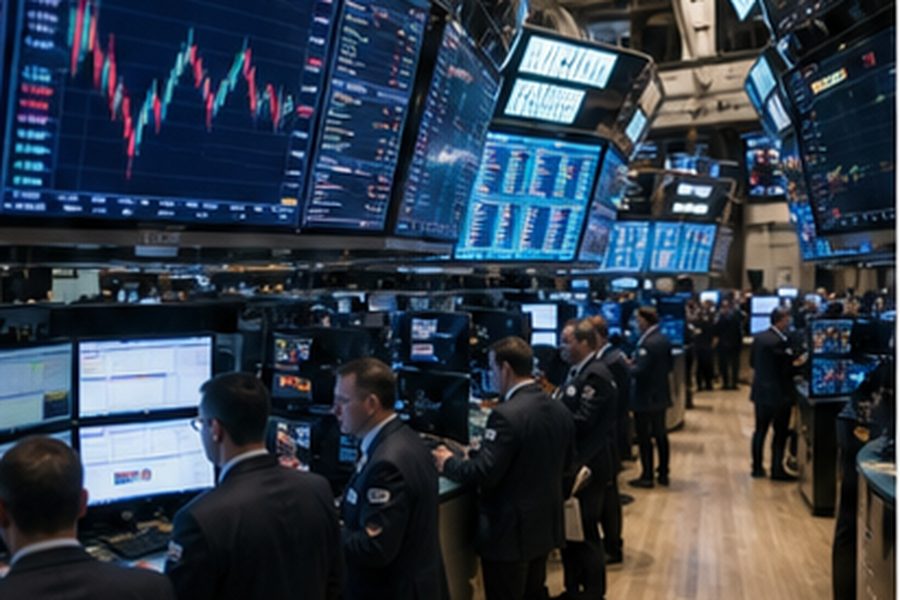
UK inflation rises to 3.6% as diesel hits record high
UK consumer price inflation rose to 3.6% in October from 3.5% in September, driven by a 33.2% annual rise in motor fuel costs, with diesel at a record high and the FTSE 100 closing down 1.3%.
Special Report
Market signals across stocks, rates, crypto, commodities and private capital, written for operators and investors watching where money moves next.
38 public articles

UK consumer price inflation rose to 3.6% in October from 3.5% in September, driven by a 33.2% annual rise in motor fuel costs, with diesel at a record high and the FTSE 100 closing down 1.3%.


Anthropic will price its Nasdaq listing at $83 a share, valuing the Claude maker above $1.4tn and raising about $94bn, in the first US IPO of a company built entirely around AI.

The International Energy Agency reports the first oil surplus since the Iran war began, with supply outpacing demand by almost 2m barrels a day in October, even as diesel remains the market's overriding concern.

Anthropic has set a price range of $70 to $78 a share for its Nasdaq listing, targeting a valuation of up to $1.4tn and a raise of as much as $64.4bn, according to a US regulatory filing reported by The Guardian and BBC News.

The Bank of England has raised its base rate from 3.75% to 4% by an 8-1 vote, its first increase in more than three years, and signalled another rise is likely unless the Iran conflict is resolved.

Lloyds Banking Group reported a third-quarter pre-tax profit of £2.3 billion, almost double the prior year, as higher interest rates lifted income a day after the Chancellor announced a temporary rise in the bank surcharge.

John Healey's first budget doubles the bank profit surcharge to 6% for 15 months and adds 2p to tax on property and savings income, funding a £100 payment to 20 million households as the OBR cuts its growth outlook.

UK inflation jumps as war-driven fuel costs lift CPI to 3.5%, its highest in almost a year. Borrowing overshot forecasts and a November rate rise now looks close to priced in, one week before the Budget.

Elon Musk has pledged one of his own SpaceX shares to every child in America, with the White House confirming the stock would be delivered through Trump Accounts. The pledge is worth roughly $10.7bn at Friday's closing price, but the mechanics, voting rights and tax treatment remain undefined.

Anthropic has said it will commit 5% of its shares to a public benefit fund, with an option to add 2% for every 50% rise in its value, as it prepares for a potential listing.

A $1.2bn money-laundering penalty against Bank of America is a supervisory signal. Compliance teams should treat it as a prompt to audit KYC files, monitoring thresholds and correspondent-banking exposure.

A hotter-than-expected US inflation print has forced rate and FX desks to revisit assumptions on Federal Reserve easing, bond duration and dollar-sensitive exposures.

Reports of ship attacks near the Strait of Hormuz have reached a record high while oil exports slow, a signal for crude and freight markets to price war-risk cover, rerouting and delivery delay into term supply decisions.

Grocery price inflation has resumed its rise, with UK shoppers responding by hunting harder for promotions. The shift matters for supermarket margins, supplier negotiations and consumer-goods investors modelling demand downtrading.

The euro has fallen to a 17-month low against the dollar as French sovereign debt concerns transmit into currency markets. Treasury and FX risk teams need to reassess hedge ratios, OAT spread exposure and cross-border pricing assumptions.

A coordinated G7 release of crude and diesel, triggered by a Trump threat, shifts global balances. The decisive variables for traders are volume, timing, product mix and the offsetting risk from North Sea strike action.

A new Kenyan refinery backed by Africa's richest man has been launched despite land protests, according to BBC News. The project alters regional fuel import dependency and forces traders to reassess refining margins, logistics costs and capital allocation across East African energy infrastructure.

Sam Altman has tied an OpenAI listing to safety milestones rather than revenue or market windows, while the company scrapped a model rollout over safety concerns. For holders of late-stage AI exposure, that changes how exit timelines and secondary liquidity should be modelled.

Disclosed political holdings in big tech and AI create headline and governance risk for those equities. Investors should assess concentration exposure, monitor potential conflicts or policy signalling, and stress-test portfolios for sentiment-driven volatility in AI-linked names.

British AI neocloud Nscale has secured $3.36B in convertible financing ahead of a planned US IPO. The structure matters as much as the headline number for investors weighing debt-like dilution against datacentre buildout costs.

The IMF has told advanced economies to bring debt down as borrowing costs rise, a warning that lands alongside an £18bn August borrowing overshoot in the UK and renewed pressure on the Chancellor before the Budget.

UK consumer confidence has fallen to a three-year low as households brace for an interest rate rise and job market weakness ahead of the Budget, per The Guardian.

Japan has lifted interest rates to a 31-year high to curb rising prices, reopening the carry-trade calculation for treasury and FX desks. The decision changes hedging ratios, repatriation economics and Japan-sourced borrowing costs.

The Bank of England held rates at 3.75% on 17 September 2026 but signalled it could raise them if high energy prices keep inflation elevated. Treasury teams should model a hawkish hold.

Surging inflation has put interest rates back in focus as policymakers meet in Japan, the US and the UK. Treasury teams should revisit floating-rate exposure, refinancing calendars and hurdle rates.

Europe's first commercial orbital launch by Isar Aerospace marks a shift in launch capability, offering new options for satellite operators and local suppliers. This briefing examines the commercial implications, supply chain opportunities, and risks.

An Amazon cargo plane crash at Miami International Airport could heighten regulatory scrutiny and raise insurance premiums for air cargo operators, affecting logistics costs and supply chain decisions.

The Chancellor's claim that the UK economy is 'turning a corner' faces scrutiny amid rising debt. We examine the evidence and implications for business strategy.

Mid-market foundries are navigating volatile scrap steel prices through dynamic pricing, inventory management, and supplier diversification. This analysis examines the commercial impact and strategic outlook.

Mid-market manufacturers are increasingly using basis trades to hedge the widening price gap between LME and SHFE copper. This analysis explains the mechanics, costs, and risks.

Non-bank lenders are moving into repo markets traditionally dominated by banks, offering mid-market corporates new short-term funding routes. This shift changes pricing, collateral flexibility, and systemic risk.

The copper-gold ratio has historically signalled shifts in global capital expenditure. This analysis examines its current signal, what it means for mining, construction, and manufacturing, and the risks of relying on it.

Secondary copper and aluminum prices are moving ahead of primary metals and official PMI data. We examine what the scrap market signal says about manufacturing sentiment and what it means for procurement and investment decisions.

Mid-market firms are moving from just-in-time to just-in-case inventory strategies, increasing working capital needs and reshaping demand for inventory financing.

A sustained divergence between Capesize and Supramax dry bulk freight rates is reshaping commodity trade routes. Mid-market importers face higher costs for smaller parcel sizes and must reassess procurement strategies.

Mid-market manufacturers are increasingly using metal forward contracts to hedge both input cost volatility and currency exposure. This analysis examines the strategy, its commercial implications and the risks involved.

Rising short-term interest rates are compressing margins for mid-market distributors who rely on inventory financing. This analysis examines the shift from just-in-time to just-in-case inventory models, the cost of carry, and alternative working capital strategies.

The basis trade — a leveraged arbitrage between Treasury cash and futures — has grown to a size that regulators and institutional investors can no longer ignore. This analysis examines the mechanics, the risks, and the commercial implications for portfolio managers, prime brokers, and market makers.