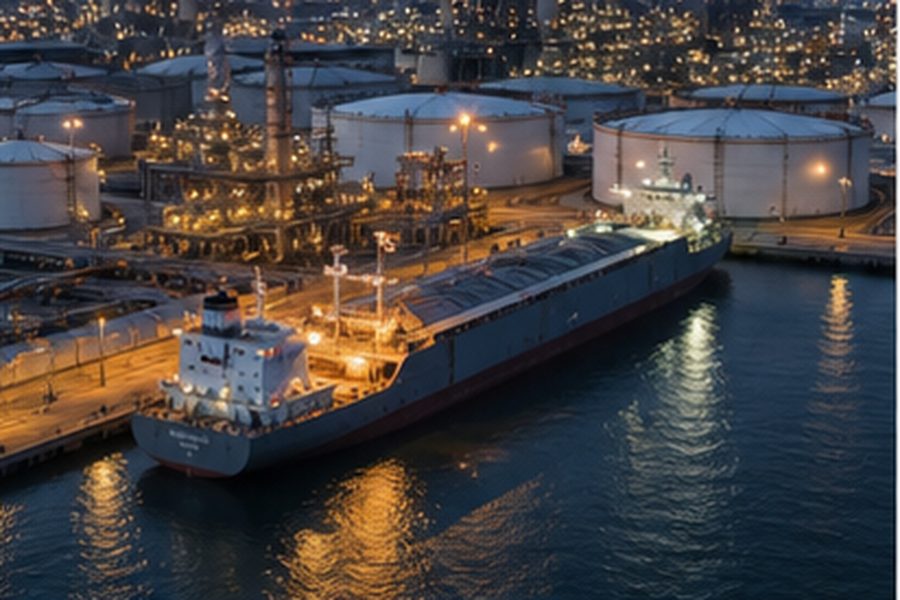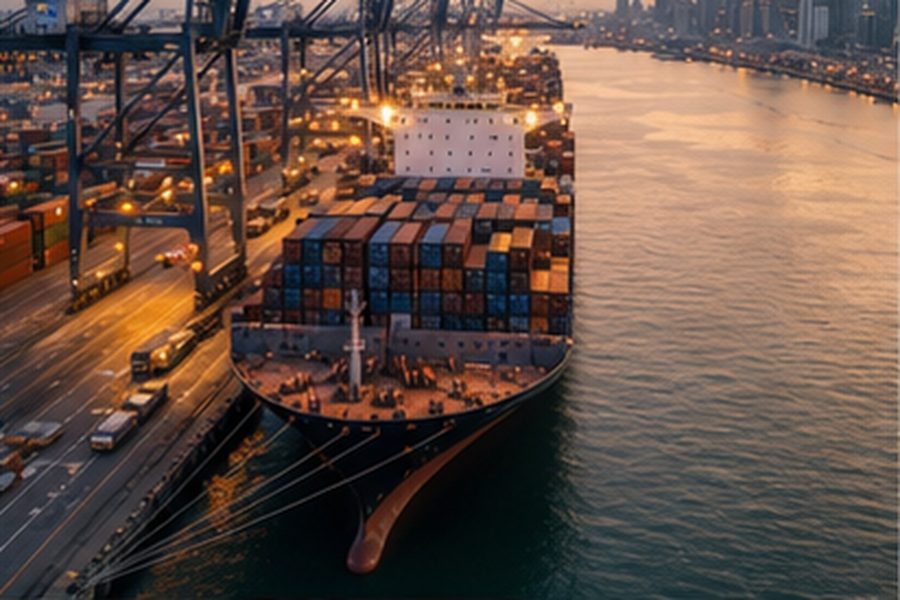
Oil traders are used to pricing the Strait of Hormuz as a permanent background risk. The question now is whether that background risk has moved far enough to change the arithmetic on freight, insurance and delivery timing. Reports of ship attacks near the waterway have reached a record high at the same time as oil exports have slowed, according to BBC News (bbc.co.uk). For anyone buying, selling or moving crude through the region, that combination is not a headline to note and forget. It is an input to the model.
The distinction matters because the two signals pull in different directions. A record number of reported attacks points to elevated security risk and, by extension, pressure on war-risk insurance and crew willingness to transit. Slowing exports point to reduced physical flow, which can tighten regional availability and lengthen delivery uncertainty. Neither signal on its own tells a trader what to do. Together they argue for stress-testing assumptions that were set in a calmer period.
What the evidence supports, and what it does not
The verified reporting establishes two facts: reported ship attacks near Hormuz are at a record high, and oil exports are slowing. It does not, on its own, establish the cause of the export slowdown, the precise volume lost, or how long either condition will persist. Traders should treat the attack record as a security and insurance signal and the export slowdown as a flow signal, then test how the two interact in their own books. The temptation in a moment like this is to reach for a single dramatic number, such as a spot crude price spike or a headline freight rate. The more useful discipline is to separate what is observed from what is inferred. Observed: more reported attacks, slower exports. Inferred: higher war-risk premiums, possible rerouting, longer voyage times and wider crude price volatility. The inferences are plausible and commercially relevant, but they are inferences, and they should be labelled as such in any internal risk note.The freight and insurance channel
For physical traders, the first transmission channel is cost of carriage. War-risk insurance is typically repriced when perceived security risk rises, and those costs feed directly into the freight component of a delivered crude price. A record level of reported attacks gives underwriters a reason to reassess. The practical consequence is that freight quotes obtained before this period may no longer be reliable for forward planning. Rerouting is the second channel. If crews or charterers become more reluctant to transit, voyages can lengthen, tying up vessels and reducing effective fleet availability. That can push freight rates higher even where the underlying volume of oil has not changed much. Slower exports compound the effect: fewer cargoes moving through a constrained corridor can mean less efficient scheduling and more uncertainty about when a given barrel arrives. Refiners should therefore model freight and insurance as variables rather than fixed line items. A simple sensitivity table, showing delivered cost under a range of war-risk premiums and voyage durations, is more useful than a single point estimate. The aim is not to predict the exact premium but to know at what level the economics of a particular cargo or term contract deteriorate.Why slowing exports change the crude price question
A security shock alone often produces a short, sharp price reaction that fades. A security shock combined with slower physical exports is a different proposition, because it touches supply rather than sentiment. If exports are genuinely slower, regional buyers may need to source elsewhere, and the marginal barrel becomes more expensive to place. That is the mechanism through which a shipping story becomes a crude pricing story. The caution is that the reporting does not quantify the slowdown. Traders should avoid assuming a specific lost volume. Instead, they can build scenarios: a short disruption with rapid normalisation, a prolonged period of elevated risk with modest flow reduction, and a more severe case in which both security and flow deteriorate. Each scenario should carry its own freight, insurance and delivery-delay assumptions, and each should be tested against existing term commitments.A decision framework for term supply
Before locking in term supply, operators can work through four questions. First, which cargoes in the book actually transit Hormuz, and what share of total exposure do they represent? Second, what war-risk and freight assumptions underpin current contract economics, and how much can those rise before margins compress? Third, what delivery windows are promised to downstream buyers, and how much slippage can be absorbed without penalty? Fourth, what alternatives exist, whether alternative suppliers, alternative routes or drawing on inventory, and at what cost? This framework is deliberately unglamorous. It does not require a view on the geopolitics of the region. It requires only that the trader knows the exposure and the break-even points. In a period of record reported attacks and slowing exports, that discipline is more valuable than a forecast.Commercial impact across the chain
For trading houses, the immediate impact is on working capital and margin. Higher freight and insurance raise the cost of moving each barrel, and longer voyage times tie up capital for longer. For refiners, the risk is to run rates and product delivery schedules if crude arrives late or costs more than planned. For end buyers, the risk is price volatility and the possibility that term contracts are repriced at renewal. There is also a second-order effect worth watching. If the corridor is perceived as less reliable, some buyers may shift toward suppliers outside the region, changing trade flows and the relative value of different crude grades. That shift, if it happens, would be gradual and would show up in differentials rather than headline prices. Traders should watch for it without assuming it.Risks and unknowns
The central unknown is duration. A record high in reported attacks could reflect a temporary cluster or a sustained deterioration, and the reporting does not settle which. The export slowdown could be driven by security concerns, by maintenance, by policy or by demand, and the cause matters for how long it lasts. There is also the risk of overreaction: pricing in a severe scenario that does not materialise can leave a trader uncompetitive on term supply. A further unknown is the reliability of attack reporting itself. Reported incidents are not the same as confirmed incidents, and the record high should be read as a signal of elevated risk rather than a precise measure of it. Traders should cross-check with their own insurers, brokers and charterers before adjusting contracts.FY Outlook
The near-term outlook is for continued elevated uncertainty around Hormuz transit. The most likely path, absent further deterioration, is a period of higher war-risk premiums and more cautious scheduling, with crude prices carrying a risk premium that fades only when reported incidents decline. If exports continue to slow, the risk premium could prove more durable. The practical stance for traders is to keep term commitments flexible where possible, price in a wider freight and insurance range, and revisit assumptions frequently rather than at contract renewal only.Sources and References
- BBC News (bbc.co.uk) — Ship attack reports near Hormuz reach record high as oil exports slow.
- The Guardian (theguardian.com) — IMF advice on pensions and welfare, cited for broader macro context only.
Why It Matters
The Strait of Hormuz is one of the world's most important oil transit corridors, so a record high in reported ship attacks alongside slowing exports is a direct signal for crude and freight markets. Traders and refiners that do not model war-risk premiums, rerouting and delivery delays risk locking in term supply on assumptions that no longer hold.The reporting and evidence for this briefing were checked against bbc.co.uk (bbc.co.uk) and theguardian.com (theguardian.com).