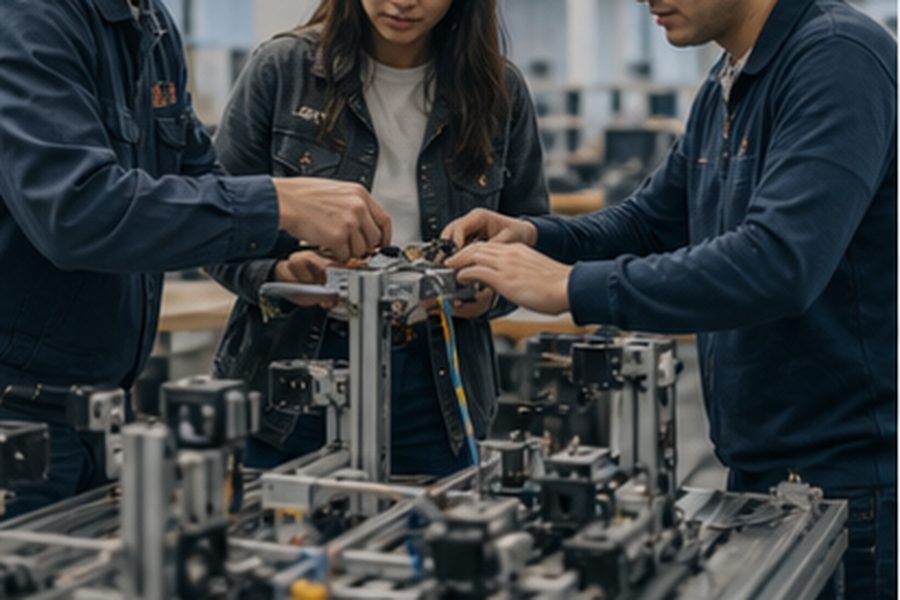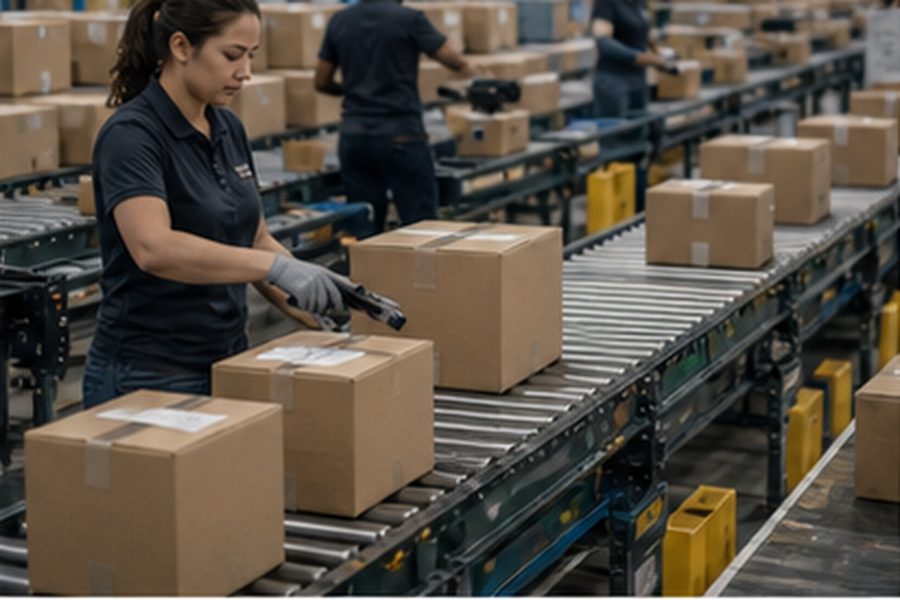
Specialty food brands face a familiar scaling problem: demand grows, but building or buying production capacity requires significant capital expenditure (capex). Traditional co-packers offer a solution, but contracts are often rigid, minimums are high, and spare capacity is rarely visible. A new model—co-manufacturing capacity exchanges—is emerging to address this gap. These platforms match brands with spare production lines to those needing capacity, creating a shared-economy approach to food manufacturing.
This case study examines how capacity exchanges work, why they are gaining traction, and what they mean for founders, operators, and investors. We focus on the practical mechanics, the commercial implications, and the risks that remain.
What Is a Co-Manufacturing Capacity Exchange?
A co-manufacturing capacity exchange is a digital marketplace or brokered service that connects food brands with available production line time. Unlike traditional co-packers, who own and operate their own facilities, exchanges aggregate spare capacity from existing manufacturers—often small or mid-sized facilities that have underutilised lines. Brands can search for specific capabilities (e.g., high-pressure processing, aseptic filling, or gluten-free certification) and book time slots.
The model is analogous to shared warehousing or freight exchanges, but tailored to food production. It reduces the need for brands to invest in their own equipment, and it allows manufacturers to monetise idle capacity. For specialty food brands, this can be a faster and cheaper route to scale than building a plant or signing a long-term co-packing agreement.
Why It Matters
For specialty food brands, the traditional scaling path is capital-intensive. A new production line can cost millions, and even a modest co-packing contract often requires minimum order quantities that strain cash flow. Capacity exchanges lower the barrier to entry: brands can test new products, enter new markets, or handle seasonal spikes without committing to permanent infrastructure.

For manufacturers, the exchange model turns idle time into revenue. A line that sits unused for 20% of the year can become a profit centre. This is particularly relevant in a high-interest-rate environment where financing new equipment is expensive. The model also supports sustainability by reducing the need for new factory construction.
How the Model Works in Practice
A typical exchange operates as follows:
- Listing: Manufacturers list available line time, specifying capabilities, certifications, and lead times.
- Search and match: Brands filter by product type, volume, packaging, and compliance requirements.
- Booking and contracting: The exchange facilitates contracts, often with standardised terms for liability, quality, and payment.
- Production and quality control: The manufacturer runs the product, with the brand providing specifications and possibly on-site oversight.
- Payment and feedback: Payment is processed through the platform, and both parties rate each other.
Some exchanges also offer value-added services like formulation support, regulatory guidance, or logistics coordination. The key difference from traditional co-packing is the flexibility: contracts can be shorter, volumes smaller, and switching costs lower.
Case Study: A Specialty Snack Brand's Experience
Consider a hypothetical specialty snack brand that produces nut-based bars. After two years of growth, demand exceeds its small in-house kitchen's capacity. The brand needs to scale to 10,000 units per month but cannot afford a new line. A traditional co-packer requires a 50,000-unit minimum, which would tie up cash and risk waste.
Using a capacity exchange, the brand finds a regional bakery with a spare enrobing line that is certified gluten-free. The exchange facilitates a three-month contract for 10,000 units per month, with an option to extend. The brand avoids capex, maintains quality through the bakery's existing certifications, and can adjust volumes based on sales data. The bakery earns incremental revenue without hiring new staff or buying equipment.
This example illustrates the core value proposition: flexibility and capital efficiency. However, it also highlights potential challenges—coordination costs, quality consistency, and intellectual property protection.
Commercial Impact
For brands, the primary commercial benefit is reduced capital intensity. Instead of tying up cash in equipment, brands can allocate resources to marketing, R&D, or working capital. This is especially valuable for early-stage companies that need to prove demand before investing in fixed assets.
For manufacturers, the exchange model can improve asset utilisation. A line that runs at 70% capacity can move to 85%, with the incremental revenue contributing directly to margin. This is particularly attractive in a slow-growth economy where volume is hard to come by.
For investors, capacity exchanges represent a new asset-light opportunity. They can invest in platforms that take a commission on transactions, rather than in capital-heavy factories. The model also reduces risk for portfolio companies that use the exchange, as they avoid large capex commitments.
Risks and Unknowns
Despite the promise, capacity exchanges face several risks:
- Quality control: When a brand uses a third-party line, maintaining consistent quality is harder. Differences in equipment, staff, and processes can lead to variability.
- Intellectual property: Sharing a production line with other brands raises the risk of recipe or process leakage. Contracts must include robust confidentiality clauses.
- Regulatory compliance: Food safety regulations vary by jurisdiction. A line that is certified for one product may not be suitable for another without additional audits.
- Coordination complexity: Matching supply and demand in real time is difficult. A line that is available today may not be available next month, creating planning uncertainty.
- Market liquidity: Exchanges need a critical mass of both supply and demand to be useful. In niche categories, there may not be enough listings to make the platform viable.
These risks are not insurmountable, but they require careful management. Brands should conduct thorough due diligence on any manufacturer they use, and exchanges should provide clear standards and dispute resolution mechanisms.
FY Outlook
The co-manufacturing capacity exchange model is still nascent, but it aligns with broader trends: asset-light scaling, digital marketplaces, and supply chain resilience. As interest rates remain elevated, the cost of capital will continue to push brands toward flexible capacity solutions. We expect to see more platforms emerge, possibly with vertical specialisation (e.g., beverages, snacks, or frozen foods).
Consolidation is likely as the market matures. Larger exchanges may acquire smaller ones to gain liquidity, or traditional co-packers may launch their own exchange-like offerings to defend their turf. Brands that adopt this model early may gain a competitive advantage in speed-to-market and cost structure.
However, the model's long-term viability depends on trust. Exchanges must demonstrate that they can consistently deliver quality, compliance, and reliability. If they succeed, they could become a standard part of the food manufacturing landscape.
Conclusion
Co-manufacturing capacity exchanges offer a pragmatic solution for specialty food brands that need to scale without heavy capex. By sharing production lines, brands can access flexible capacity, while manufacturers can monetise idle time. The model is not without risks, but for many companies, the benefits outweigh the drawbacks.
For founders and operators, the key takeaway is to evaluate capacity exchanges as a strategic option, not just a tactical fix. For investors, the model represents a new way to back food brands without exposing them to capital-intensive assets. As the ecosystem develops, those who understand the mechanics and risks will be best positioned to benefit.