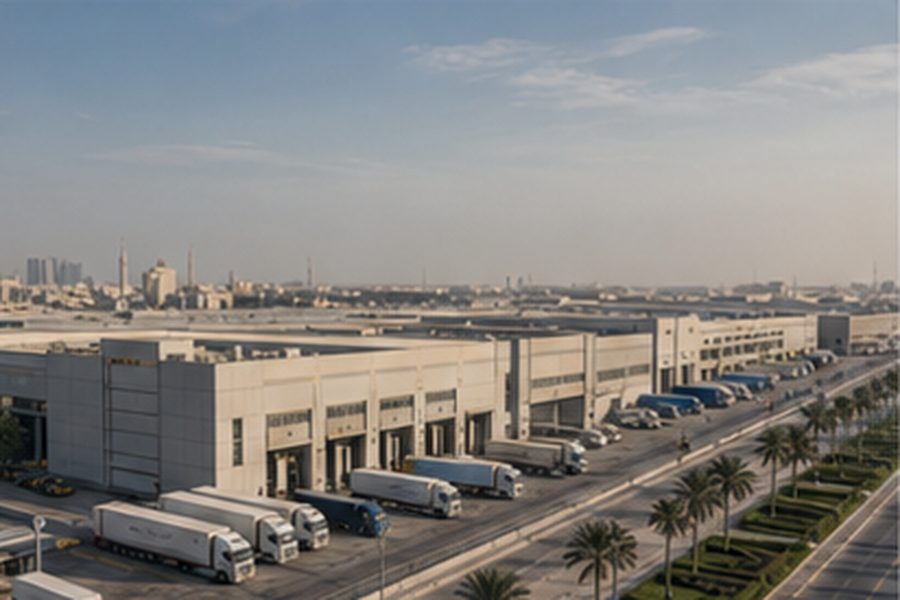
Dubai’s dual licensing system — free zone and mainland — has long been a defining feature of its business environment. Free zones offer 100 per cent foreign ownership, tax exemptions and simplified setup, making them attractive for startups, trading firms and regional headquarters. Mainland companies, by contrast, can trade directly anywhere in the UAE, bid for government contracts and operate without geographic restrictions.
For mid-market firms — those with annual revenues between AED 10 million and AED 200 million — the decision to migrate from a free zone to a mainland licence is rarely straightforward. The choice affects cost structure, market access, regulatory burden and strategic flexibility. This article provides a decision framework grounded in current regulations and commercial realities.
The Structural Difference
A free zone company is licensed to operate within its designated zone or, in some cases, to conduct business with other free zones and international markets. Direct sales to mainland customers require a local distributor or a separate mainland licence. This restriction is the single most important factor in the conversion decision.
A mainland company, registered with the Department of Economy and Tourism (DET) in Dubai, can trade anywhere in the UAE without intermediary arrangements. Since 2021, mainland companies have also been permitted 100 per cent foreign ownership in most commercial and industrial activities, removing a historical barrier to conversion.
When Conversion Makes Commercial Sense
Three scenarios typically justify the move:

1. Direct access to mainland customers. If a free zone firm finds that more than 30 per cent of its revenue comes from mainland clients via distributor arrangements, the margin lost to the distributor often exceeds the additional cost of a mainland licence. At that point, conversion becomes a margin optimisation play.
2. Government contract eligibility. Only mainland companies can bid for Dubai government tenders. For mid-market firms in construction, facilities management, IT services or professional consulting, the government procurement market is substantial. The Dubai Government Procurement Portal lists contracts across multiple sectors. A free zone licence is an automatic disqualifier.
3. Expansion into multiple emirates. A mainland licence in Dubai permits trading across all seven emirates without additional registrations. Free zone licences are geographically restricted. Firms with clients in Abu Dhabi, Sharjah or the Northern Emirates face operational friction that a mainland licence removes.
The Cost Calculus
Conversion costs include:
- Licence fees. A mainland commercial licence typically costs between AED 15,000 and AED 30,000 per year, depending on the activity. Free zone licences can be cheaper, starting around AED 10,000, but vary significantly by zone.
- Office space. Mainland companies require a physical office registered with the DET. Free zones often allow flexi-desks or virtual offices. The cost differential can be AED 20,000 to AED 100,000 per year depending on location and size.
- Visa costs. Mainland companies can obtain more visas per square metre of office space than most free zones, which can reduce per-visa costs for firms with larger teams.
- Local service agent. For certain mainland activities, a local service agent (UAE national) is still required, though the 2021 reforms removed this requirement for most commercial activities. Professional activities such as legal services may still require one.
- Conversion fees. Migrating an existing free zone company to a mainland structure involves legal fees, licence cancellation, new registration and potential renegotiation of contracts. These one-time costs can range from AED 10,000 to AED 50,000 depending on complexity.
Regulatory and Compliance Implications
Mainland companies face stricter compliance requirements:
- Financial reporting. Mainland companies must maintain audited financial statements if they exceed certain thresholds (typically AED 50 million in revenue or assets). Free zone companies often have lighter reporting obligations.
- VAT registration. Both free zone and mainland companies must register for VAT if taxable supplies exceed AED 375,000 per year. The threshold and process are identical.
- Corporate tax. The UAE introduced a 9 per cent federal corporate tax on profits exceeding AED 375,000 from June 2023. Free zone companies that meet qualifying conditions may still benefit from a 0 per cent rate on qualifying income. Mainland companies are subject to the standard rate. This is a critical factor in the conversion decision.
- Labour law. Mainland companies fall under the UAE Labour Law (Federal Decree-Law No. 33 of 2021). Free zones have their own labour regulations, which can differ on working hours, termination and end-of-service benefits.
Risks and Unknowns
Several factors introduce uncertainty:
- Corporate tax treatment of free zone income. The distinction between qualifying and non-qualifying income for free zone tax purposes is still being clarified by the Federal Tax Authority. A free zone firm that generates significant mainland revenue may lose its tax advantage regardless of licence type.
- Regulatory changes. The UAE government has signalled further liberalisation of the free zone regime. If free zones are permitted to trade directly with the mainland without a distributor, the case for conversion weakens.
- Exit costs. Converting back from mainland to free zone is more difficult and costly than the reverse. Firms should consider whether the move is reversible.
- Contractual continuity. Existing contracts with mainland clients may need to be novated or renegotiated after conversion. This can create friction with customers.
Commercial Impact
For a mid-market firm with AED 50 million in annual revenue and 30 per cent mainland exposure, the financial impact of conversion can be estimated:
- Revenue uplift. Direct access to mainland customers typically increases margins by 5–15 per cent by removing distributor fees.
- Cost increase. Additional licence, office and compliance costs may add AED 50,000 to AED 150,000 per year.
- Tax impact. If the firm loses free zone tax benefits, the 9 per cent corporate tax on profits above AED 375,000 applies. For a profitable firm, this can be a significant cost.
- Net effect. The decision hinges on whether the margin improvement from direct access outweighs the higher costs and tax liability. For firms with high mainland revenue, conversion is usually positive. For those with limited mainland exposure, it may not be.
Why It Matters
The free zone to mainland conversion decision is not a binary choice between two licence types. It is a strategic decision that affects a firm’s cost base, market reach, tax position and regulatory burden. Mid-market firms that make the wrong choice risk either paying unnecessary distributor margins or incurring higher fixed costs without commensurate revenue. As Dubai’s economy matures and government procurement expands, the ability to compete for mainland contracts becomes more valuable. Firms that delay the decision may lose market share to competitors who have already converted.
Related Intelligence & Strategic Context
For readers tracking cross-sector implications, see our detailed report on golden triangle: how oxford, cambridge, and london are leading biotech, alongside our analysis on high street pivot: from retail to experiences and services. Broader structural developments are analyzed in our analysis on working capital rebalancing: how mid-market firms are shifting from just-in-time to just-in-case inventory financing. For jurisdictional frameworks and regional execution, consult regional hub evaluation across the Dubai / UAE jurisdiction, macro rate expectations and market analysis, and ongoing intelligence from the Business Corridors desk.
FY Outlook
Over the next 12 to 24 months, we expect:
- More mid-market free zone firms to convert as corporate tax clarity improves and the cost of distributor arrangements becomes harder to justify.
- Free zones to respond by offering hybrid licences that permit limited mainland trading without full conversion. Some zones have already introduced such products.
- Government procurement to increase as Dubai’s public investment programme accelerates. This will make mainland registration more attractive for firms in construction, technology and professional services.
- Regulatory convergence between free zone and mainland regimes, particularly on labour law and corporate tax, reducing the structural differences over time.
Conclusion
The decision to convert from a free zone to a mainland licence in Dubai should be driven by revenue exposure to the mainland market, not by general advice or industry trends. Firms with more than 30 per cent of revenue from mainland clients, or those seeking government contracts, should model the conversion economics carefully. For firms below that threshold, the cost and compliance burden of a mainland licence may outweigh the benefits. The optimal timing depends on corporate tax implications, which remain an area of active regulatory development. Mid-market firms should review this decision annually as part of their strategic planning cycle.