Mid-market manufacturers face a familiar problem: ageing equipment requires increasingly specialised maintenance, but hiring a full-time technician for every machine type is rarely cost-effective. A shared maintenance crew model is emerging as a practical response, allowing several firms to pool resources and access scarce skills on demand.
This explainer examines how the model works, why it is gaining traction, and what manufacturers should consider before joining a shared crew arrangement.
What Is a Shared Maintenance Crew?
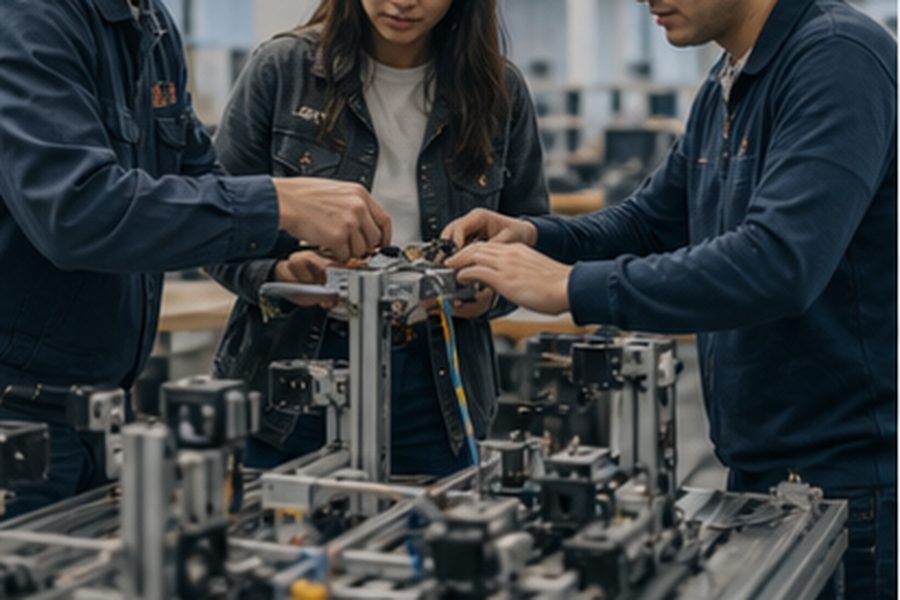
A shared maintenance crew is a group of specialised technicians employed by a consortium of manufacturers, or contracted through a third-party provider, to service equipment across multiple sites. Unlike traditional outsourcing, where a vendor sends a generic engineer, shared crews are often tailored to the specific machinery and processes of the participating firms.
The model is most common among mid-market manufacturers—typically those with annual revenues between £10m and £200m—that operate in the same region or industrial cluster. By pooling demand, they can justify the cost of a specialist who would otherwise be underutilised at any single plant.
Why Ageing Equipment Drives the Need
Many mid-market manufacturers run equipment that is 15 to 30 years old. Original equipment manufacturers (OEMs) often reduce support for older models, making third-party expertise essential. However, the skills required to maintain legacy systems—such as programmable logic controllers (PLCs), hydraulic systems, or specific CNC controls—are increasingly rare.

A 2023 survey by the Manufacturing Technologies Association (MTA) found that 68% of UK manufacturers reported difficulty recruiting skilled maintenance engineers. While the MTA does not break down figures by company size, anecdotal evidence suggests mid-market firms are disproportionately affected because they cannot offer the same career progression or pay as larger competitors.
How the Model Works in Practice
Shared maintenance crews typically operate in one of three ways:
- Cooperative hiring: Several manufacturers jointly employ a technician or team, with costs and scheduling agreed in advance. This requires a high degree of trust and clear governance.
- Third-party specialist provider: A local engineering services firm builds a team of specialists and contracts them out to multiple manufacturers on a retainer or call-out basis. This is the most common arrangement, as it avoids the legal complexity of joint employment.
- Industry association scheme: A trade body or local enterprise partnership coordinates a shared crew, often subsidised by regional development funds. This is more common in areas with a strong manufacturing heritage, such as the Midlands or the North West.
In all cases, the crew is typically deployed on a scheduled basis—for example, one day per week at each site—with emergency call-out options for critical failures.
Commercial Impact: Cost Savings and Uptime
The primary commercial benefit is cost reduction. A specialist maintenance engineer in the UK commands a salary of £40,000–£55,000, plus employer costs and benefits. For a mid-market firm needing only 20% of that person's time, a shared arrangement can cut labour costs by 60–70% compared with a full-time hire.
Beyond direct labour savings, shared crews can improve equipment uptime. Because the crew is dedicated to a small group of sites, they develop deep familiarity with the machinery, reducing diagnostic time and repeat failures. One engineering services firm in the West Midlands reported that its shared crew model reduced average response time for breakdowns from 48 hours to 12 hours, although this figure is anecdotal and not independently verified.
Risks and Unknowns
Shared maintenance is not without risks. The most significant is scheduling conflict: if two member firms experience breakdowns simultaneously, the crew must prioritise, potentially leaving one site idle. Clear service-level agreements (SLAs) are essential, but even the best SLAs cannot eliminate the risk of competing demands.
Another concern is knowledge transfer. If the crew is employed by a third party, the participating manufacturers may not retain the institutional knowledge needed to maintain the equipment if the arrangement ends. This is particularly acute for legacy machinery where OEM documentation is sparse.
There is also the question of liability. If a shared crew member makes an error that damages equipment, who is responsible? Contracts must clearly define liability, insurance, and indemnity clauses. Smaller firms may lack the legal resources to negotiate these terms effectively.
Why It Matters
The shared maintenance crew model is a pragmatic response to a structural skills shortage. It allows mid-market manufacturers to maintain productivity without bearing the full cost of scarce expertise. For investors and operators, the model signals a shift towards more collaborative, asset-light approaches to industrial maintenance.
It also has implications for the wider economy. If the model scales, it could reduce the pressure on the skilled trades pipeline, as fewer firms compete for the same limited pool of technicians. However, it could also concentrate risk: if a key crew provider fails, multiple manufacturers could face simultaneous maintenance gaps.
FY Outlook
Expect the shared maintenance model to expand beyond its current niche. As equipment ages and the skills shortage persists, more mid-market manufacturers will likely join or form shared crews. The next phase may involve digital platforms that match technicians to manufacturers on a dynamic basis, using predictive maintenance data to optimise scheduling.
However, the model's success depends on governance. Manufacturers should invest in robust contracts, clear SLAs, and exit strategies. Those that do will gain a competitive edge; those that treat shared crews as a casual arrangement may find themselves exposed.
Conclusion
Shared maintenance crews offer a practical solution to a pressing problem. They reduce costs, improve uptime, and give mid-market manufacturers access to skills they could not otherwise afford. But the model requires careful planning and a willingness to collaborate with competitors. For manufacturers willing to navigate those complexities, the potential rewards are significant.
This article is based on publicly available information and editorial analysis. No proprietary data was used.