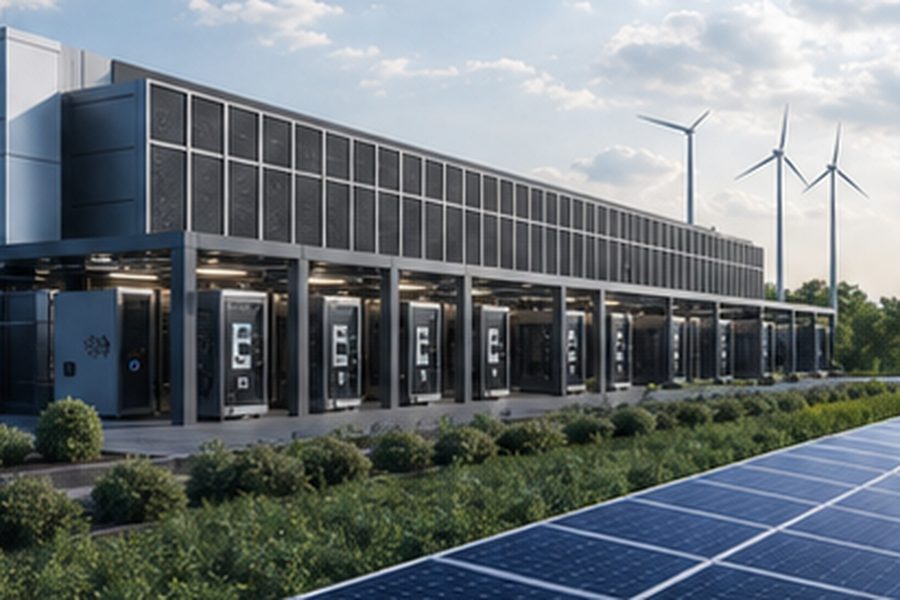
Virginia has long been the default answer for hyperscalers and colocation developers seeking capacity in the United States. The state's concentration of fibre, power and skilled labour made it the world's largest data centre market. That assumption is now being tested. On 18 September 2026, the governor of Virginia created an AI task force and moved to restrain data centre expansion, according to reporting by The Verge (theverge.com). The same day, BBC News (bbc.co.uk) reported on flight chaos caused by a 'millisecond' software defect, a reminder that digital infrastructure failures carry immediate operational and reputational costs. For site selection teams, the Virginia signal is not a ban but a shift in the cost of doing business. Permitting timelines, power procurement and community engagement now require explicit budget lines.
What changed in Virginia
The governor's move follows growing local backlash against AI infrastructure across US jurisdictions. The creation of an AI task force suggests the state intends to coordinate policy on energy, water and land use rather than simply approve projects. The practical effect is likely to be longer review periods, more conditions attached to approvals and greater scrutiny of power and water consumption. For developers, the risk is not that Virginia becomes closed for business, but that the cost and time to secure permits rise materially. That changes the arithmetic for projects that were underwritten on the assumption of fast-track approvals.Why it matters for site selection
Site selection teams typically compare locations on land cost, power price, fibre latency, tax incentives and labour availability. Virginia's shift adds three new variables: permitting delay risk, power procurement risk and community-opposition cost. These are harder to quantify than a land price, but they can dominate a project's net present value. A six-month delay in energisation can push revenue recognition beyond a customer's contractual start date, triggering penalties or lost contracts. Power procurement risk is particularly acute for AI workloads, which require high-density, continuous supply. Community opposition can add legal fees, public relations costs and design changes. The research packet does not provide specific figures for these costs, so teams should model them as scenarios rather than point estimates.Budgeting for permitting delays
Permitting delays are not a new phenomenon, but Virginia's policy direction makes them more likely. Site selection teams should build a permitting timeline with explicit contingencies. A useful approach is to separate the process into land-use approval, environmental review, power interconnection and building permits. Each stage has different stakeholders and different probabilities of delay. For AI capacity, the power interconnection queue is often the longest pole. Teams should budget for legal and engineering fees associated with multiple rounds of review, and for the carrying cost of land and options during extended timelines. They should also consider whether to sequence projects so that smaller, lower-risk phases can proceed while larger phases await approval.Power procurement risk
Power procurement is the central constraint for AI data centres. Virginia's task force is likely to examine how data centre demand affects grid reliability and consumer prices. That could lead to requirements for on-site generation, energy storage or demand-response commitments. Site selection teams should model power procurement as a portfolio of options: grid supply, power purchase agreements, on-site gas or renewable generation, and storage. Each option has different permitting, cost and timeline characteristics. The research packet does not specify what the task force will recommend, so teams should prepare for a range of outcomes, from voluntary efficiency targets to mandatory curtailment provisions. A useful decision framework is to rank sites by the diversity of power options available and the regulatory predictability of the jurisdiction.Community opposition costs
Community opposition is often treated as a public relations issue rather than a budget line. In practice, it can add months to a project and require design changes that reduce capacity or increase cost. Virginia's move reflects a broader pattern of local resistance to AI infrastructure. Site selection teams should budget for community engagement, including local hiring commitments, infrastructure contributions and ongoing dialogue with elected officials. They should also assess the political risk of a jurisdiction, not just its technical suitability. A site with cheap power but a hostile local government may be more expensive in the long run than a site with higher power prices but a supportive planning environment.Comparing alternative sites
Virginia's tighter posture does not mean developers should abandon the state. It means they should compare it explicitly with alternatives. Within the United States, states such as Texas, Ohio and Georgia have attracted data centre investment, though each has its own permitting and power constraints. Internationally, markets in Europe, the Middle East and Asia are competing for AI capacity, but they bring different latency, data sovereignty and cost profiles. The research packet does not provide a ranking of alternative sites, so teams should build their own scorecard. A practical framework is to score each site on five dimensions: time to energisation, power cost and diversity, permitting predictability, community support and total cost of ownership. Virginia may still score well on fibre and labour, but its advantage on speed is narrowing.Commercial impact
The commercial impact of Virginia's policy shift is likely to be felt first by colocation providers and hyperscalers with expansion plans in the state. They may face higher development costs, longer timelines and greater uncertainty in customer contracts. Investors should watch for changes in capital expenditure plans and for signals that capacity is shifting to other markets. For enterprises buying AI capacity, the risk is higher prices and longer lead times in the Virginia market. That may make alternative locations more attractive, but it also raises the importance of contractual protections for delivery dates and power supply. The research packet does not provide market-level pricing data, so these effects should be treated as directional rather than quantified.Risks and unknowns
The main unknown is the specific content of the task force's recommendations and the timeline for any new rules. The governor's move could be largely symbolic, or it could lead to binding restrictions. The research packet does not specify which. Other unknowns include the response of utilities, the role of local governments and the possibility of legal challenges. Site selection teams should monitor these developments closely and avoid making irreversible commitments based on a single policy signal. They should also consider the possibility that other states follow Virginia's lead, which would reduce the value of simply relocating within the United States.FY Outlook
Over the next 12 to 24 months, Virginia is likely to remain a major data centre market, but its growth rate may slow relative to other regions. The task force's work will probably produce a mix of incentives and constraints, with power and water use at the centre of the debate. Developers that can demonstrate efficient design, community benefits and diversified power procurement will be better positioned. Those that rely on speed and scale alone may find the environment less accommodating. The broader trend is towards greater regulatory scrutiny of AI infrastructure, which means site selection will become a more strategic function, not just a real estate exercise.Sources and References
Why It Matters
Virginia is the world's largest data centre market, and its policy shift signals that AI infrastructure faces tighter permitting, power and community constraints. Site selection teams that fail to budget for these risks may face delays, cost overruns and contractual penalties. The article provides a framework for modelling these risks and comparing alternative locations.The reporting and evidence for this briefing were checked against theverge.com (theverge.com) and bbc.co.uk (bbc.co.uk).