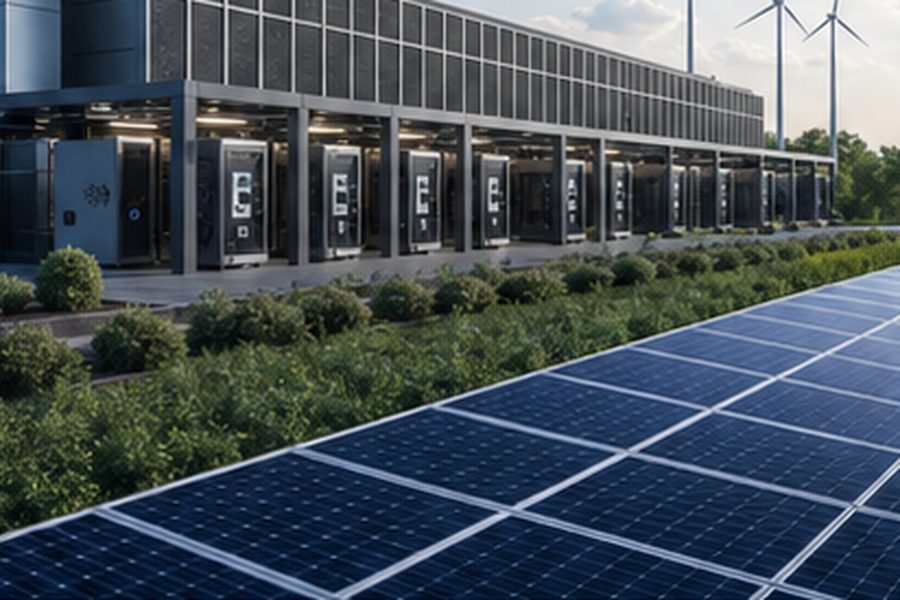
The water-energy nexus has long been a concern for utilities and heavy industry, but mid-market manufacturers are now confronting it directly. Rising water scarcity, tighter environmental regulation and volatile energy prices are pushing plants to reconsider how they source both inputs. A growing number are exploring co-locating desalination facilities with renewable generation – solar, wind or hybrid – to stabilise costs and secure supply.
This article examines what is changing, why it matters for mid-market operators, and what the near-term outlook suggests. It draws on publicly available project announcements and industry analyses, with clear caveats where data is incomplete.
What Is Changing
Historically, desalination was the preserve of water-stressed regions with deep pockets – Gulf states, parts of Australia, and increasingly California. Energy costs typically accounted for 30–50% of operating expenses, making the technology uneconomic for most manufacturers. But two trends have shifted the calculus.
First, the cost of renewable energy has fallen sharply. Solar photovoltaic and onshore wind are now among the cheapest sources of new electricity in many markets. Second, water scarcity is no longer a regional anomaly. Industrial basins in Europe, North America and Asia are facing periodic shortages, and regulators are tightening discharge and abstraction permits.
Mid-market manufacturers – those with annual revenues between £50m and £500m – are not building large-scale desalination plants. Instead, they are installing modular, containerised units with capacities of 1,000 to 10,000 cubic metres per day, paired with on-site renewable generation. This allows them to treat brackish groundwater or seawater for process use, cooling or even as a feed for high-purity applications.

Why Co-Location Makes Commercial Sense
The core logic is cost hedging. By pairing desalination with renewables, manufacturers can fix a significant portion of their water and energy costs over a 15–20 year horizon. This is particularly valuable in sectors where water is a critical input – food and beverage, pharmaceuticals, electronics, textiles and chemicals.
For example, a beverage plant in a water-stressed region might currently pay £1.50 per cubic metre for municipal water, with prices rising 5–8% annually. A desalination unit powered by a solar array could deliver water at £0.80–£1.20 per cubic metre, depending on capital costs and solar irradiance. The renewable generation also offsets grid electricity purchases, which are increasingly volatile.
Moreover, co-location reduces transmission losses and grid dependency. A plant that generates its own power and treats its own water is less exposed to grid outages, price spikes and regulatory interventions. This resilience has become a board-level concern, particularly after the energy crisis of 2022–2023.
Who Is Affected
The primary beneficiaries are mid-market manufacturers in water-stressed regions with good renewable resources. Sectors with high water intensity and strict quality requirements are most likely to adopt early. These include:
- Food and beverage: process water, cleaning, ingredient water
- Pharmaceuticals: high-purity water for production
- Electronics: ultrapure water for semiconductor fabrication
- Textiles: dyeing and finishing processes
- Chemicals: cooling and process water
However, the technology is not limited to arid regions. Coastal plants in temperate climates can use seawater desalination, while inland plants can treat brackish aquifers. The key is the gap between municipal water costs and the levelised cost of desalinated water, plus the reliability of renewable generation.
Commercial Impact
The commercial impact is twofold. First, it reduces operating costs and provides a hedge against input price inflation. Second, it can enhance the company's environmental credentials, which is increasingly important for securing contracts with large corporate buyers and for accessing green finance.
For example, a mid-market food manufacturer that co-locates a desalination plant with solar generation might reduce its water bill by 20–30% and its energy bill by 15–25%, depending on local conditions. These savings can be reinvested or passed on to customers, improving competitiveness.
There is also a potential revenue stream: excess renewable energy can be sold back to the grid, or excess water can be supplied to neighbouring businesses or communities. However, these opportunities depend on local regulations and grid connection agreements.
Risks and Unknowns
Despite the appeal, co-location carries significant risks. Capital costs are substantial – a 5,000 cubic metre per day desalination plant can cost £5–10 million, plus the renewable generation system. Financing requires long-term confidence in water and energy prices, which is not always available.
Operational complexity is another concern. Desalination requires skilled operators, and membrane fouling or corrosion can lead to downtime. Renewable generation is intermittent, so plants need either storage or grid backup, which adds cost. Regulatory uncertainty – particularly around water abstraction and brine discharge – can also delay projects.
Moreover, the economics are highly site-specific. A plant in a region with low municipal water prices and abundant grid power may not see a positive return. The technology is not a universal solution; it is a strategic option for specific conditions.
FY Outlook
Over the next three to five years, we expect to see more mid-market manufacturers piloting co-located desalination and renewable projects, particularly in regions where water stress is acute and renewable costs are low. The trend will be driven by:
- Falling costs of modular desalination units
- Increasing corporate water stewardship commitments
- Government incentives for water efficiency and renewable energy
- Growing investor pressure to disclose water and energy risks
However, adoption will be uneven. Early movers will likely be in Australia, the Middle East, parts of the United States and southern Europe. In the UK, where water is relatively abundant but energy costs are high, the focus may be more on energy recovery and efficiency than on desalination.
We also anticipate that technology providers will bundle desalination and renewable systems into turnkey offerings, reducing the engineering burden on manufacturers. This could lower barriers to entry and accelerate adoption.
Conclusion
Co-locating desalination with renewable generation is a rational response to converging water and energy risks. For mid-market manufacturers in the right locations, it offers a credible hedge against input cost volatility and supply disruption. But it is not a one-size-fits-all solution. The decision requires careful site-specific analysis, robust financial modelling and a clear understanding of operational and regulatory risks.
As the water-energy nexus tightens, manufacturers that can secure both inputs at predictable costs will gain a competitive advantage. Those that ignore the trend may find themselves exposed to rising costs and supply uncertainty. The next few years will reveal which strategies prove most resilient.