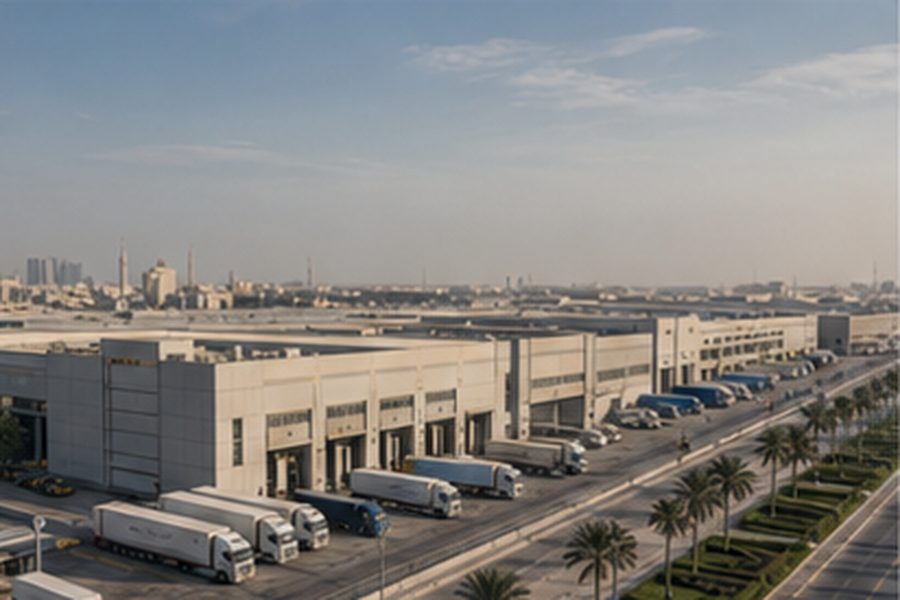
The promise of a 0% corporate tax rate or a 100% ownership structure has long been the lure of free zones in Hong Kong and Dubai. For SMEs, the appeal is obvious: reduce tax, gain credibility, and access international banking. But a growing number of companies are now attempting to secure these benefits without actually relocating their operations. Instead, they are using shared directorships and virtual offices to create a qualifying presence on paper.
This practice, which we call 'free zone office arbitrage', sits in a grey area between legitimate tax planning and aggressive avoidance. It is not illegal per se, but it carries significant compliance and reputational risks. This case study examines how the arbitrage works, why it has become more common, and what it means for founders, investors, and the jurisdictions involved.
The Mechanics of the Arbitrage
The typical structure involves an SME incorporated in Hong Kong or Dubai (or both) that wants to access the tax benefits of a free zone. In Hong Kong, the key incentive is the territorial tax system, which only taxes profits sourced in Hong Kong. In Dubai, free zones offer a 0% corporate tax rate for qualifying activities, provided the company meets specific substance requirements.
To qualify, a company must demonstrate a physical presence, local management, and substantive business activity. In practice, this means having an office, employees, and board meetings in the jurisdiction. However, many SMEs do not want to bear the cost of a full physical relocation. Instead, they rent a virtual office address, appoint a local director (often provided by the service provider), and hold board meetings via video conference.
For example, a Hong Kong trading company might set up a Dubai free zone entity with a virtual office in a business centre. The company appoints a UAE-resident director who is also a director of several other unrelated companies. The board meets quarterly via Zoom. The company invoices its international clients from the Dubai entity, claiming the 0% tax rate. The actual trading activity, however, remains in Hong Kong.

Why It Has Become More Common
Several factors have driven the rise of this arbitrage. First, the cost of physical presence in both Hong Kong and Dubai has increased. Office rents in Central Hong Kong and DIFC are among the highest in the world. Virtual offices cost a fraction of a physical lease.
Second, the pandemic normalised remote work and remote governance. Regulators and banks have become more accepting of virtual board meetings and digital signatures. This has made it easier for companies to maintain a paper trail that suggests local management.
Third, the competitive pressure on SMEs is intense. Margins are thin, and a 0% tax rate can be the difference between survival and failure. The incentive to push the boundaries of compliance is strong.
Finally, the service provider industry has grown. Many corporate service providers now market 'free zone packages' that include a virtual office, a local director, and a bank account. These packages are often sold as a turnkey solution, with little emphasis on the substance requirements.
The Compliance Gap
Regulators in both Hong Kong and Dubai have become more sophisticated in detecting shell companies. The UAE has introduced economic substance regulations (ESR) that require free zone companies to demonstrate real economic activity. Hong Kong’s Inland Revenue Department (IRD) has also increased its scrutiny of companies claiming territorial source exemptions.
The key test is whether the company has 'economic substance' in the jurisdiction. This is not just about having a registered address. It involves having a physical office, employees, and management decisions made locally. A virtual office and a shared director are unlikely to satisfy this test.
In Dubai, the ESR requires companies to report their activities and demonstrate that they are 'directed and managed' in the UAE. A director who is a nominee and does not actually make decisions will not pass scrutiny. Similarly, Hong Kong’s IRD will look at where the contracts are negotiated, where the decisions are made, and where the employees are located.
Why It Matters
For SMEs, the risk is not just a tax bill. It is the potential for penalties, interest, and even criminal prosecution in cases of deliberate evasion. In the UAE, failure to comply with ESR can result in fines of up to AED 50,000. In Hong Kong, the penalties for incorrect tax returns can be up to 200% of the tax undercharged.
Beyond the legal risk, there is a reputational risk. Banks are increasingly asking for proof of substance before opening or maintaining accounts. If a company is found to be a shell, its banking relationships may be terminated, which can be fatal for a trading business.
For the jurisdictions themselves, the arbitrage undermines the integrity of their tax incentives. If free zones become known as tax havens for paper companies, the OECD and the EU may place them on grey lists, which would harm their international standing and access to capital.
Commercial Impact
The commercial impact is twofold. On one hand, the arbitrage creates a market for service providers who sell these structures. On the other hand, it creates a compliance burden for SMEs that may not fully understand the risks.
For founders and operators, the decision to use a virtual office and shared director should be based on a realistic assessment of the business’s actual presence. If the company genuinely has clients in the region and plans to hire staff, a virtual office may be a temporary step. But if the company is simply trying to avoid tax, the structure is likely to fail.
For investors, the presence of such structures in a portfolio company’s corporate structure is a red flag. It suggests that the management may be willing to take aggressive tax positions, which could lead to future liabilities.
Risks and Unknowns
The main risk is regulatory change. Both Hong Kong and Dubai are under pressure from the OECD’s Base Erosion and Profit Shifting (BEPS) framework. The UAE has already introduced a 9% corporate tax rate for large businesses, and there is speculation that free zone incentives may be tightened. Hong Kong is also reviewing its territorial tax system.
Another unknown is how banks will respond. As compliance costs rise, banks may become more reluctant to serve free zone companies with virtual offices. This could make it harder for SMEs to access banking services, even if they are legitimate.
Finally, there is the question of enforcement. Regulators may not have the resources to audit every company, but they are increasingly using data analytics to identify anomalies. A company with a virtual office and a shared director is a prime target.
Related Intelligence & Strategic Context
For readers tracking cross-sector implications, see our detailed report on free zone pass-through: structuring a regional sales office in dubai to serve saudi arabia and africa without a local entity, alongside our detailed report on free zone to mainland migration decision: when mid-market firms in dubai should convert. Broader structural developments are analyzed in our detailed report on multi-skilled workforce premium: how mid-market firms are restructuring compensation and career ladders to retain employees who operate across engineering, sales, and operations. For jurisdictional frameworks and regional execution, consult substance requirements in traditional offshore jurisdictions, decentralized finance architecture on our Crypto desk, and specialist commentary from the Business Corridors desk.
FY Outlook
The arbitrage will continue as long as the cost of physical presence remains high and the enforcement is lax. However, the trend is towards greater scrutiny. SMEs should expect more questions from banks and tax authorities about their substance.
The smart play for SMEs is to use virtual offices and shared directors only as a temporary measure while they build a real presence. The long-term cost of non-compliance is far higher than the short-term savings.
For service providers, the opportunity is to offer compliant structures that help SMEs transition to full substance. This is a more sustainable business model than selling shell packages.
Conclusion
Free zone office arbitrage is a symptom of a broader tension between tax incentives and economic substance. While it may offer short-term savings, the risks are substantial. SMEs should approach these structures with caution and seek professional advice before committing.
The jurisdictions involved are likely to tighten their rules, and the cost of non-compliance will rise. The companies that thrive will be those that build genuine operations in the free zones, not those that merely rent an address.